
About XanthosHealth. XanthosHealth built ConnectedNest, a patient-led, oncology-focused platform that connects patients with cancer to community-based services with a committed response-time and real-time status visibility. Founded by University of Minnesota professors Pinar Karaca-Mandic, PhD and David Haynes, PhD, the company is supported by multiple NIH grants and collaborates with oncology clinics, health systems, and community based organizations.
The operational gap after screening
Most oncology clinics screen for health-related social needs such as transportation, food, housing, finances, and caregiver strain. Unfortunately, positive screens often disappear into voicemail or community based organization services may no longer exist; capacity and eligibility are opaque; and clinical teams rarely see definitive confirmation that the patient received the needed information. Social workers are often overwhelmed with a larger than 300:1 patient:social worker ratio so with limited time and often outdated directories, they struggle to get patients connected with the care and services they need. Additionally, current systems lack the closed-loop data which tells them if the patient received the services.
The downstream risk impacts clinical outcomes: avoidable missed medical appointments, missed infusions and radiation sessions, disease progression, avoidable hospitalizations or ED visits, and reduced survival rates.
What ConnectedNest changes
ConnectedNest is not another directory. It is not another googling of organizations one by one, calling them, asking for eligibility, capacity, and applying for various services and programs. It’s a platform that makes acknowledgment, scheduling, and completion of non medical services seamless, and visible to patients, community-based organizations (CBOs), and oncology teams. It is the one of its kind promise to surround the patient with excellence in community support for non-medical needs so that the patient, their care givers and clinical teams can focus on the medical care and treatments.
- EmpowerNest lets patients and caregivers complete a brief self-screen and immediately see a curated, local list that matches their eligibility and language. With consent, they request connections now or at home—without starting over later.
- CommunityNest gives CBOs a single queue to accept and manage referrals and do secondary referrals to other relevant CBOs for patients. CBO partners update eligibility and capacity/waitlist, commit to a response target of ≤48 hours, and update status in real time.
- EngageNest provides navigators and oncology teams a consolidated view of referral status—acknowledged, scheduled, completed, or re-routed—so follow-up is exception-based rather than blanket chase work.
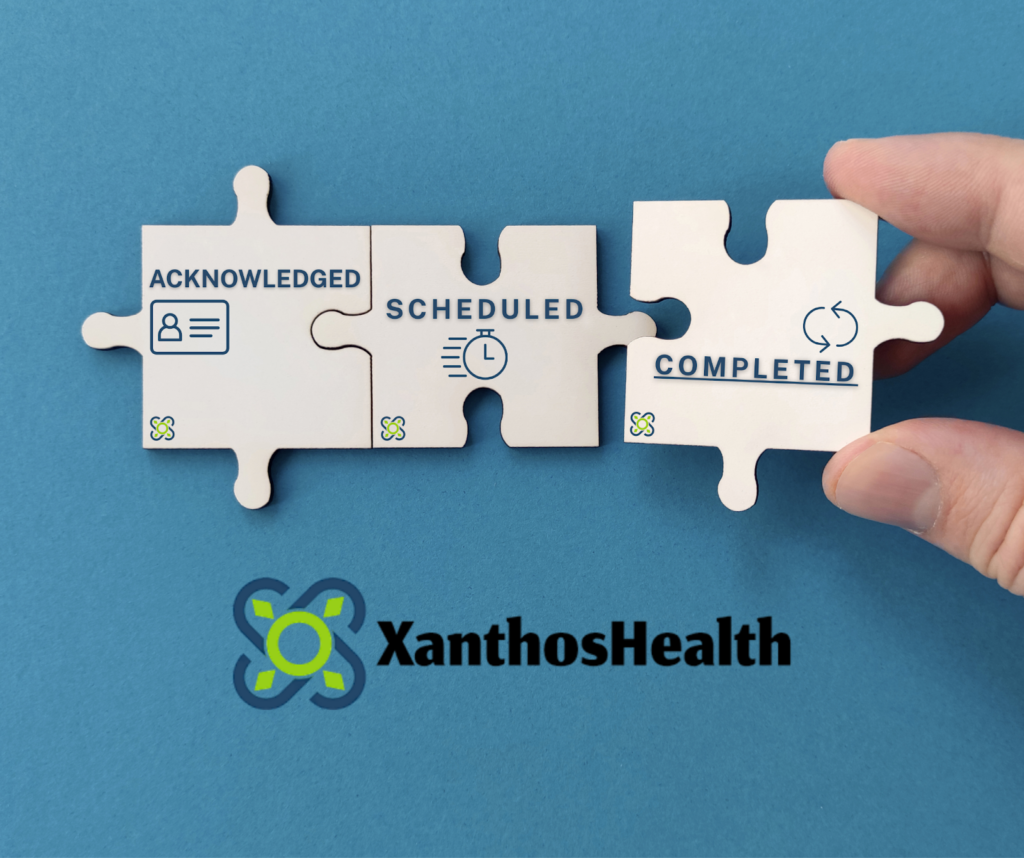
What day zero looks like
At the first oncology visit or the social worker follow-up, the patient completes the self-screen in EmpowerNest with the social worker at their side. Alternatively, patients may just do their self-screening of non-medical needs on their own, at their own time, at their own place, at their own pace, without any discomfort to share information with a clinical staff member. The platform presents a ranked list—transportation, nutrition support, financial counseling—mapped to what matters most now. Because only available programs are presented. The patient can confidently initiate the connection and trust that the CBO will acknowledge within the target window of 48 hours or less. Between visits, the patient can revisit the list, change priorities, and request additional support without having to reach out to the social worker or retelling their story to a CBO.
The result is a shorter initial consult, fewer manual follow-ups, and a shared source of truth about whether non-medical barriers were addressed.
Governance and privacy posture
ConnectedNest is built for HIPAA-aligned operations. Patients initiate sharing and can see what will be shared before they consent. Access is limited by role so social workers, clinical staff, and CBO personnel view only the information required to fulfill the referral. Every status change is timestamped and attributable, creating an auditable trail that supports both operational reviews and value-based reporting.
Deployment without an IT project
Programs can launch quickly using a secure, browser-based workflow and light training. This EHR-agnostic platform enables rapid deployment and allows teams to prove the operational model without immediate integration requirements. When integration becomes necessary, the system connects via standards-based FHIR APIs using the SMART on FHIR framework. In short: start now; add EHR connections that support the social worker’s process flows that are unique to each system.
What to measure
A closed-loop pathway improves only when it’s measured with clear operational metrics. ConnectedNest supports a common set of definitions so performance can be compared across sites and partners:
- Acknowledgment time: patient request to CBO acknowledgment
- Time-to-service: acknowledgment to first encounter
- Completion rate: proportion of referrals resulting in service delivery
- Secondary referrals: Additional services provided to patients through a secondary CBO referral.
- Social Worker Efficiency: change in follow-up volume and phone time per patient
These measures don’t replace clinical outcomes, they protect them by reducing non-medical causes of delay.
Early signals from the field
In pilot work, patients selected organizations mapped to their immediate needs and were able to initiate connections without staff finishing the referral for them. CBO partners acknowledged within the ≤48-hour target window, and social workers reported fewer follow-ups because capacity and status were visible. Most importantly, patients did not experience delays attributable to waitlists or unanswered messages.
Why this scales in oncology
ConnectedNest curates participating CBO partners, sets expectations for response and status updates, provides only available programs to patients, so dead ends are avoided, and tracks the same KPIs across markets. The platform can be used independent of an EHR integration so getting started requires no IT resources. Meanwhile the platform can, when the clinic or health system desires, integrate with EHRs using a SMART on FHIR connection.
What this means for providers
For oncology leadership, the value proposition is significantly improving the social worker’s efficiency and ability to support patients without additional headcount. Providers and Social Workers can see that the patient has connected with non medical services and when they are completed. Community partners work from one queue with clear expectations rather than fragmented emails. And executives get clear metrics—acknowledgment time, time-to-service, completion, and re-route efficiency.
Continue the conversation
- Explore ConnectedNest → /connectednest
- Publications & grants → /publications
- Schedule a discussion → /contact